
Outdoor Interiors Teak and Wicker A Deep Exploration of Warmth, Texture, and Timeless Outdoor Living

Outdoor spaces have quietly transformed over the past decade. Patios are no longer just places for plastic chairs and a barbecue. They have become extensions of the home, emotional spaces where mornings begin with coffee and evenings end with stories under soft lighting. Designers now call this movement outdoor interiors, a philosophy that treats exterior environments with the same care as living rooms.

At the heart of this transformation sit two materials that feel almost destined to work together: teak and wicker. One comes from dense tropical hardwood forests, rich with natural oils and golden warmth. The other brings texture, craftsmanship, and relaxed comfort through woven structure. Together, they create balance between durability and softness, structure and ease.
This article explores the world of teak and wicker outdoor interiors through storytelling, design analysis, and practical insight. Along the way, you will see visual inspirations and learn why these materials continue to dominate outdoor design across climates and cultures.
The Rise of Outdoor Interiors
A few years ago, a homeowner named Lina renovated her small backyard. She initially planned to add a simple table set. Instead, she ended up creating an outdoor lounge with layered rugs, woven seating, teak tables, and warm lantern lighting. Friends stopped calling it a patio. They called it her second living room.
This shift reflects a broader trend. According to design insights shared by Architectural Digest outdoor living trends, homeowners increasingly prioritize comfort, durability, and aesthetic continuity between indoor and outdoor spaces.
Outdoor interiors are about atmosphere. Materials must survive weather while still feeling inviting enough for daily life. Teak and wicker solve this challenge remarkably well.
Why Teak Became the King of Outdoor Furniture
Natural Strength and Weather Resistance
Teak wood has been used for centuries in shipbuilding because of its natural oils and dense grain structure. These oils protect the wood from moisture, insects, and decay, allowing furniture to survive rain, sun, and temperature changes.
Design experts explain that teak naturally resists rot and warping, which makes it one of the most reliable choices for outdoor environments. A detailed material overview from Wood Magazine’s teak wood guide highlights its exceptional dimensional stability and longevity.
In practical terms, this means a teak chair can remain outdoors for decades while developing a soft silver patina instead of deteriorating.
Emotional Warmth in Design
Beyond durability, teak offers visual comfort. Its honey tone bridges modern minimalism and rustic warmth. Designers often use teak to soften contemporary architecture made from steel or concrete.
Lina once described her teak table as “the piece that makes everything feel alive.” That emotional connection explains why teak is often viewed as an investment rather than a purchase.
Teak Outdoor Interior Inspiration
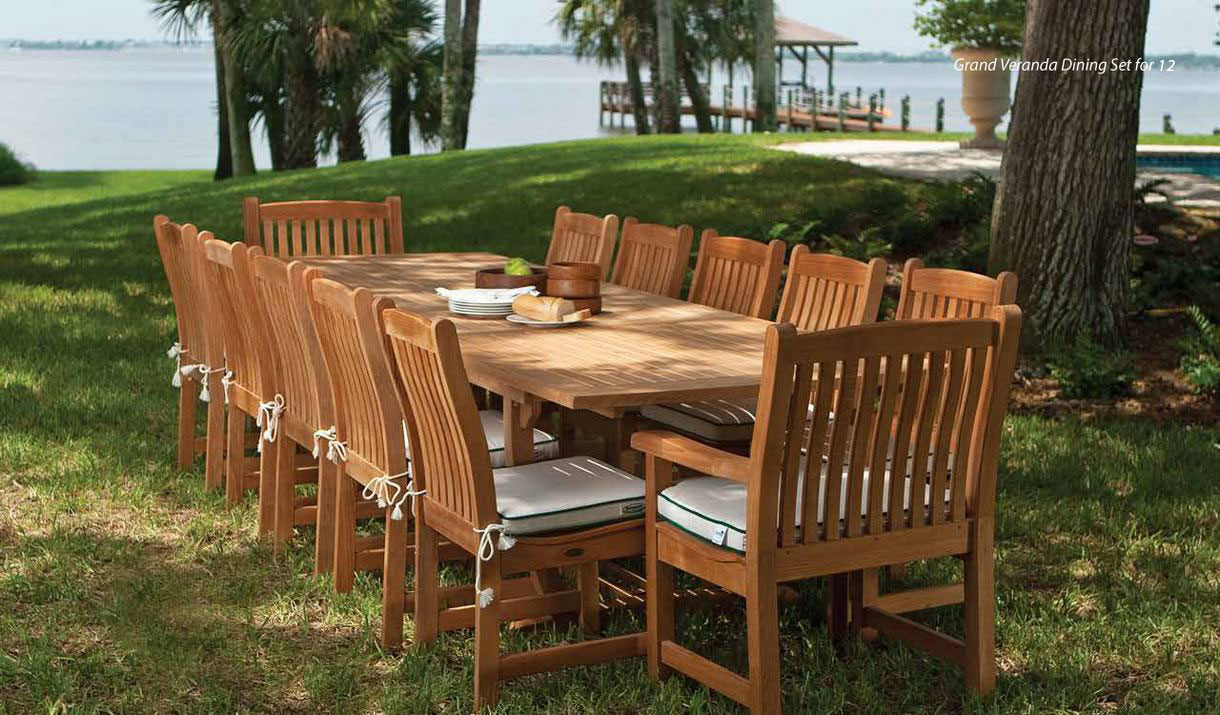
Minimalist Teak Lounge
Clean lines and neutral cushions show how teak supports modern aesthetics. The wood becomes the visual anchor, allowing textiles and greenery to remain subtle.

Poolside Teak Seating
Here teak performs both function and design. Its resistance to moisture makes it ideal near water, while its tone contrasts beautifully with stone and blue surfaces.
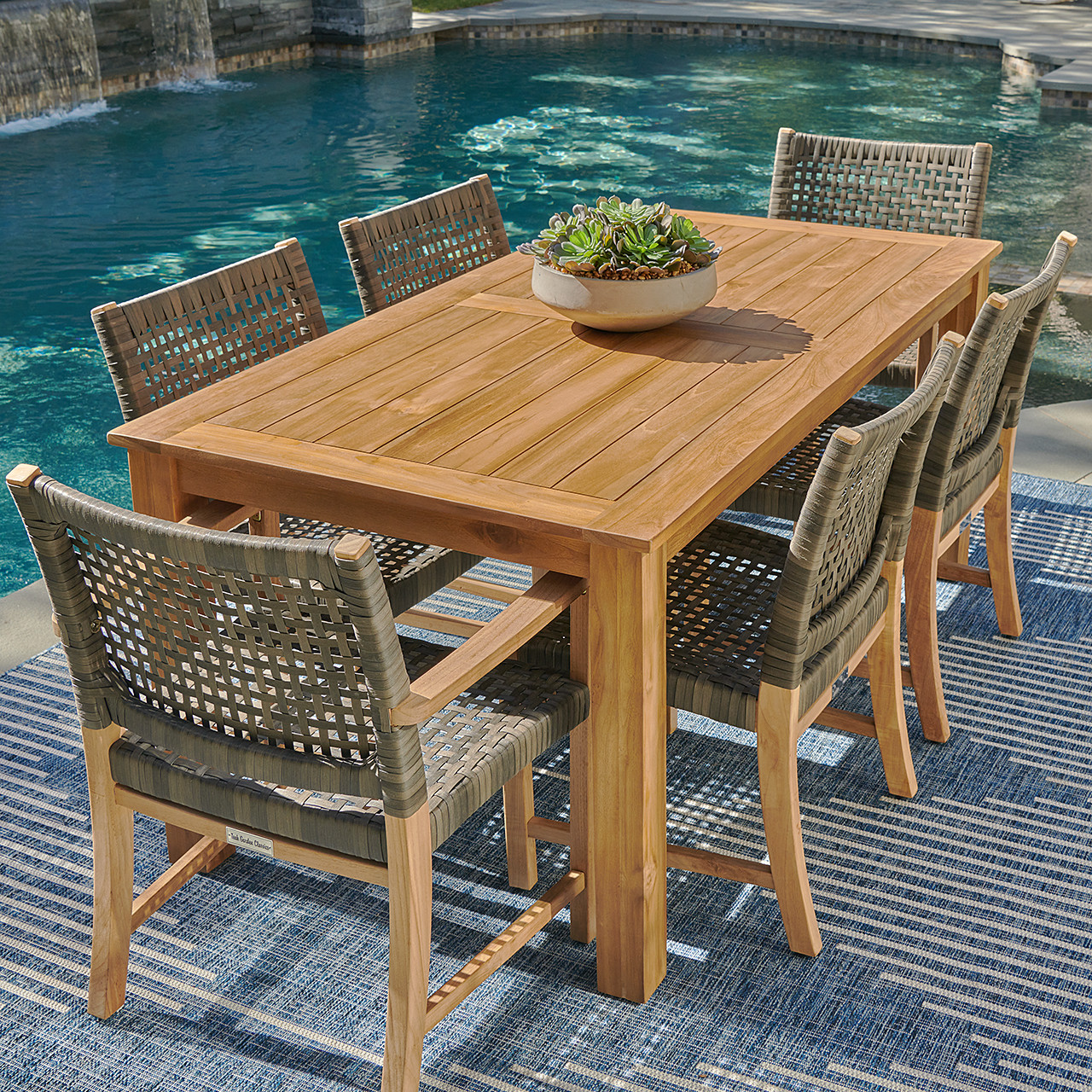
Teak Dining Environment
Large teak dining tables encourage gathering. The scale communicates permanence and hospitality, echoing indoor dining traditions.
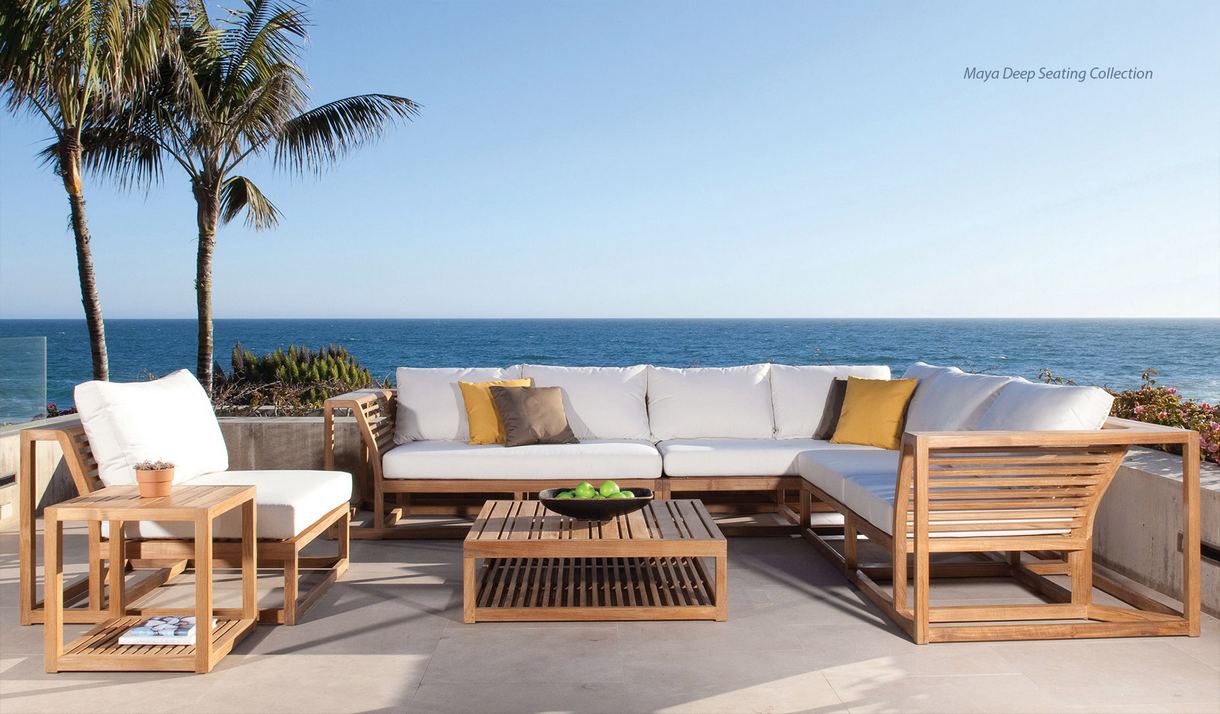
Rustic Contemporary Patio
Notice how teak blends with plants and natural textures. The furniture feels integrated into the landscape rather than placed on top of it.
Understanding Wicker: Texture That Humanizes Space
If teak provides structure, wicker introduces personality.
Wicker refers to a weaving technique rather than a specific material. Traditionally crafted from rattan or reed, modern outdoor wicker often uses synthetic fibers engineered to resist UV rays and moisture.
A helpful explanation from The Spruce’s guide to wicker furniture clarifies how woven construction creates flexibility, comfort, and airflow, making it ideal for lounging environments.
Why Designers Love Wicker
- Visual softness balances hard surfaces
- Breathable structure improves comfort in warm climates
- Lightweight construction allows flexible layouts
Wicker Outdoor Interior Inspiration

Tropical Wicker Lounge
Layered cushions and woven frames create an inviting atmosphere reminiscent of resort living. The design encourages relaxation rather than formality.
Neutral Modern Wicker Seating
Muted colors allow wicker texture to stand out. Designers often choose this approach to avoid visual clutter while maintaining warmth.
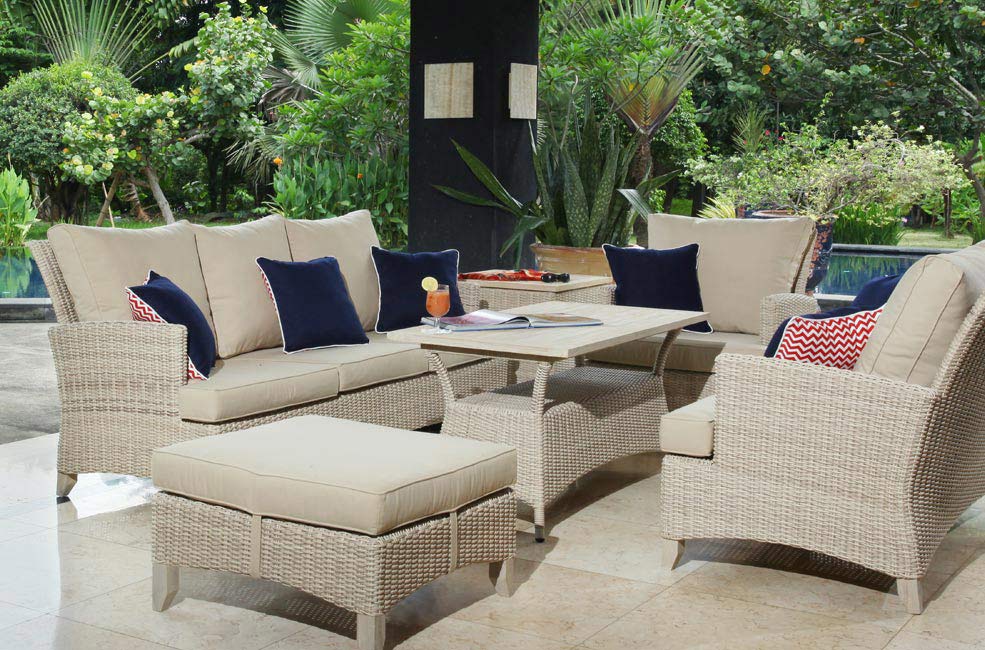
Garden Conversation Set
Circular seating arrangements promote social interaction. Wicker’s curved shapes feel more welcoming than rigid metal furniture.
Covered Patio Retreat
Under shaded structures, wicker becomes almost indoor-like. Rugs and throw pillows blur the boundary between interior and exterior.
The Magic Happens When Teak and Wicker Meet
Separately, both materials perform well. Together, they create harmony.
Teak provides grounding through weight and durability. Wicker adds movement and softness. Designers often combine teak tables with wicker seating or teak frames wrapped in woven fiber.
This pairing mirrors classic interior design principles: mix solid structure with tactile comfort.
Design Strategies for Teak and Wicker Outdoor Interiors
Create Zones Like Indoor Rooms
- Dining zone with teak table
- Lounge area with wicker sofas
- Reading corner with woven chairs
Use Neutral Foundations
Both materials shine against neutral palettes such as sand, beige, or soft gray. According to House Beautiful outdoor furniture trends, natural tones help outdoor spaces age gracefully with seasonal changes.
Add Textiles Carefully
Outdoor rugs and cushions soften surfaces while connecting indoor style with exterior durability.
Maintenance Reality: Keeping Beauty Alive
Caring for Teak
Teak can be left untreated to develop a silver-gray finish. Cleaning with mild soap occasionally removes dirt buildup. Oiling teak is optional and mainly aesthetic.
Caring for Wicker
Synthetic wicker requires simple washing with water and gentle brushing. Natural wicker benefits from covered placement or seasonal storage.
Sustainability Considerations
Responsibly harvested teak certified by sustainable forestry programs helps reduce environmental impact. Many manufacturers now combine recycled synthetic wicker with sustainable wood practices.
Final Thoughts: More Than Furniture
Teak and wicker outdoor interiors are not just about style. They represent a lifestyle shift toward slowing down, gathering, and reconnecting with nature.
A teak table holds shared meals across seasons. A wicker chair becomes the place where someone reads at sunrise. Over time, scratches and fading become memories rather than flaws.
Outdoor interiors succeed when they feel lived in. One material stands strong through decades. The other invites you to sit, stay, and tell stories a little longer.


Post a Comment
0 Comments